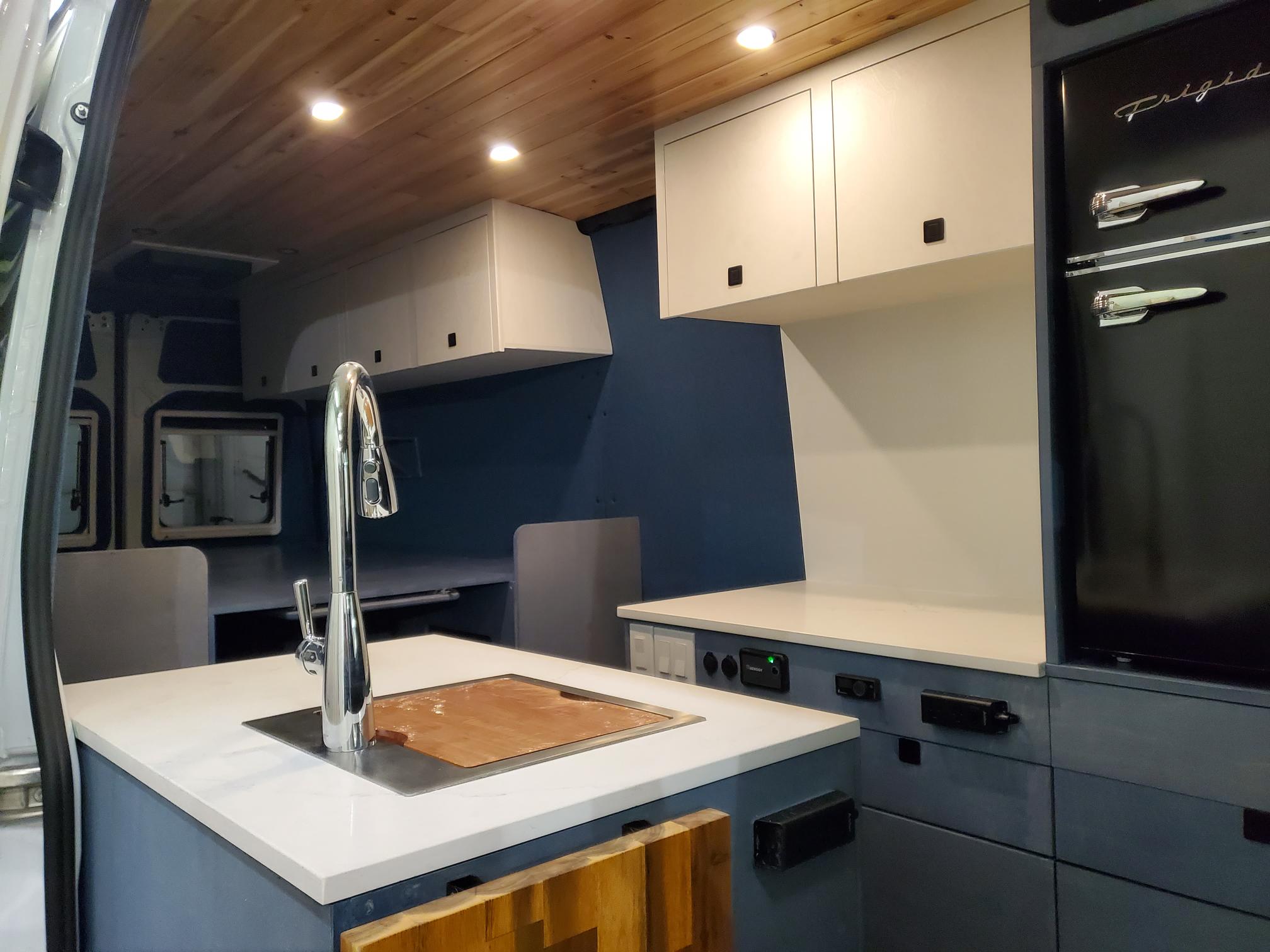
DIY vs Custom Camper Van Builds: What's Right for You?
Compare DIY and custom camper van builds in Canada. Explore costs, timelines, layouts, and expert insights to choose the right build for your travel style.
The Big Question: Build It Yourself or Go Pro?
So you've decided to hit the road in a camper van, or at least started dreaming about it. Now comes the big question: should you build it yourself, or work with a professional to bring it to life?
Both options have their place. DIY builds give you total creative control and a chance to get hands-on. A custom build gives you the confidence that every system is dialed, every inch is optimized, and nothing's going to shake loose halfway down a logging road.
We've been on both sides of this. We've built vans from scratch, taken them into the mountains, through summer storms, and across frozen highways. We've learned firsthand what works, what doesn't, and which shortcuts will cost you later. This guide is here to help you figure out which approach fits your goals, your skillset, and your sanity.
Let's break it down.
Quick Comparison: DIY vs Custom Builds
Why People Choose DIY Camper Van Builds
There's something appealing about the idea of building your own camper van. You get to design every inch, choose every material, and turn a blank cargo shell into something that feels completely your own. For some people, the build itself is part of the adventure.
DIY builds are often seen as the more budget-friendly route. You can space out your expenses, hunt for deals, and decide what to include as you go. If you already have tools and a decent workspace, the savings can add up.
There's also the creative side. Want a hidden drawer under the bed? A live-edge kitchen counter? A ceiling made of reclaimed barn wood? With DIY, no one is telling you no. You have full freedom to experiment, iterate, and create something that's totally unique.
And then there's the satisfaction. Finishing your own van — even if it takes months longer than planned — can feel incredibly rewarding. You learn a lot in the process, and you end up with a space that reflects your effort and vision.
More Control Over Design
When you build your own van, every decision is yours. Layout, materials, finishes, gear storage — it all comes down to what you want and how you want to use the space. That freedom can be a huge advantage if you have a clear vision or need something highly specific.
DIY builds let you prioritize what matters most. Want a queen bed but no shower? Need extra room for bikes or skis? Prefer a minimalist setup with just the basics? You can design around your lifestyle without compromise. Just keep in mind that total control also means total responsibility — it's up to you to make sure your design is functional, safe, and road-ready.
Potential to Save on Cost
One of the biggest reasons people go the DIY route is cost. If you already own some tools, have the time to put in, and are comfortable learning as you go, you can save money — especially on labour. You can spread out your spending over time and hunt for deals on materials and components.
That said, DIY builds can get expensive fast if you make mistakes or change directions mid-way. Unexpected tools, rebuilds, and trial-and-error upgrades often eat into those initial savings.
Hands-On Satisfaction
For many people, building the van is part of the dream. It becomes a creative project, a learning experience, and a way to connect more deeply with the space you'll be living in. There's a real sense of pride that comes from building something yourself — you'll know how everything works because you installed it.
Of course, not everyone enjoys the process. For some, it turns into a stressful side job that drags out their travel plans. But if you enjoy solving problems and working with your hands, a DIY build can be a deeply rewarding experience.
The Challenges of DIY Van Builds
Building your own camper van can be exciting, but it is rarely as simple as it looks in a time-lapse video. What starts out as a fun project can quickly become overwhelming once you are knee-deep in insulation, wiring diagrams, and repeat visits to the hardware store.
We have met plenty of people who chose the DIY route and had a great experience. But just as many have hit a wall partway through, stuck between a full-time job and a half-finished build they no longer enjoy.
DIY projects can turn out well, but they require planning, patience, and a strong ability to solve problems on the fly. Here are a few of the most common challenges to help you gauge whether this path is right for you.
Time and Skill Required
Building a camper van takes more time than most people expect. Between researching materials, sourcing parts, prepping tools, and doing the actual work, the project can stretch out for months. If you are working weekends or evenings, it often takes even longer.
A full build also calls for a wide range of skills — electrical systems, plumbing, carpentry, insulation, and finish work all come into play. If your timeline is tight or you are looking for a reliable setup without the trial and error, the DIY path might not be the best fit.
Cost Overruns and Delays
DIY builds are often seen as the cheaper option, but the final cost is not always as low as expected. Mistakes, tool purchases, last-minute changes, and rework can quickly add up. Many DIY builders also upgrade components mid-way through as they learn more, which stretches the budget.
Delays are another common challenge. Waiting on parts, juggling other responsibilities, or running into unexpected issues can push your timeline back by weeks or months. Without a clear budget and build plan, the DIY route can end up costing more than you think.
Safety and Reliability Risks
A camper van contains electrical systems, water plumbing, insulation, ventilation, and structural components that all need to be safe and dependable in real-world conditions. In a DIY build, it is easy to miss important details — undersized wires, poor ventilation, or uneven weight distribution can all lead to problems once you are on the road.
If you choose to go the DIY route, take the time to research every system, follow safety standards, and double-check your work before you hit the highway.
Why Custom Builds Make Sense for Most Travelers
For many people, going with a professional build is the smarter, simpler choice. You get a finished van that works the way it should, with systems that are tested, safe, and designed to last.
Custom builds take the guesswork out of the process. Instead of spending months figuring out wiring, insulation, or water lines, you can focus on how you want to travel and what features matter most. A good builder brings real-world experience to the table and helps you avoid the common mistakes that slow down or damage DIY projects.
At Reliable Campers, we design vans based on how they are actually used — in snowstorms, on mountain roads, at trailheads, and on long drives through Canadian backroads. That kind of experience is hard to replicate on your own, and it shows in the final build.
Built by Experts Who Use Their Vans
When you work with a builder who actually travels in vans, you get more than just technical know-how. You get real insight into what works on the road and what ends up collecting dust. From heating systems that stand up to Canadian winters to storage that actually makes sense, a builder with firsthand experience can save you from learning the hard way.
At Reliable Campers, we design based on use. We have tested layouts in snow, heat, dirt, and gravel — and that experience translates into better builds for our clients.
Faster Timelines and Less Stress
A custom build saves you from the time-consuming trial and error of figuring things out on your own. With a team that knows what they are doing, your van moves through each stage efficiently and correctly. You do not need to stop and watch wiring tutorials or guess how to install a vent fan.
That also means less frustration. Instead of hitting roadblocks, you get updates and a clear plan — and your van is ready to hit the road much sooner.
Proven Layouts That Actually Work
A lot of van layouts look good on paper but fall apart in real life. Bed too small. Kitchen too cramped. No place to sit. Professional builders have tested layouts in the real world and know how to balance comfort, storage, and function.
Custom builds also take into account your specific needs. Whether you are traveling solo, with a partner, or hauling gear for skiing or biking, your layout is shaped around how you plan to live in the space.
Long-Term Value and Support
A well-built van holds its value and gives you peace of mind on the road. You are not constantly fixing things or second-guessing your systems. Everything works the way it should, and if something does go wrong, you have support from the people who built it.
Custom builds also come with documentation and consistent quality, which makes resale easier if you ever decide to move on. Buyers trust professional work, and that can make a big difference in the long run.
Which Path Is Right for You?
There is no single right answer for every traveler. Whether you choose to build your van yourself or go with a custom build depends on your timeline, budget, skill level, and overall goals. The important thing is picking the option that gets you on the road in a way that fits your lifestyle and comfort zone.
When DIY Makes Sense
DIY is a good fit for people who enjoy hands-on work and are excited to learn through the process. If you have tools, trade experience, or simply want full control over your design, building it yourself can be a rewarding path.
It also makes sense if your travel plans are flexible and you are okay with taking your time. A slower build allows you to spread out the cost and make changes along the way. Just be prepared to face some learning curves and accept that your first setup might not be your last.
When a Custom Build Is the Better Choice
If your time is limited or you want a van that is road-ready from day one, a custom build is often the better choice. You get a professionally built interior, tested systems, and the peace of mind that comes with knowing your van is safe, functional, and built to last.
This option is also ideal if you plan to live in your van for extended periods. Comfort, durability, and smart design make a big difference when your van becomes your home. No matter which path you choose, the goal is the same — to build something that helps you explore, unwind, and enjoy the road ahead.
You might be better off with a custom build if you…
- —Want to hit the road within the next few months
- —Plan to travel in all seasons, including winter
- —Are not confident wiring or plumbing your own systems
- —Have a specific layout or comfort level in mind
- —Want a van that is ready to go without stress or trial and error
- —Value long-term reliability and resale potential
Final Thoughts from a Builder Who's Been There
We have built vans. We have lived in them. We have skied, hiked, worked, and road-tripped across Canada in every season. Spending that much time on the road teaches you what actually matters in a van and what does not.
Some DIY builds turn out great. Others come with unexpected costs, ongoing repairs, and added stress. If your goal is to travel and enjoy the journey, your van should support that experience instead of getting in the way.
A custom build is not just about finishes or convenience. It is about safety, comfort, and knowing your systems will hold up in real-world conditions. We build with that in mind because we have been in those situations ourselves.
Whether you build it yourself or work with a team like ours, make sure your van fits your life. And if you want help from people who have already done the hard learning, we are always here to guide the way.
FAQ: DIY vs Custom Camper Van Builds
Ready to Build a Van That Works for You?
Whether you're just starting to explore the idea or already have a van in the driveway, we're happy to help. We build functional, road-tested vans made for Canadian conditions and real-life travel. Have questions about layouts, timelines, or whether your van is a good fit for a build? Let's talk — we'll walk you through what's possible and how to get you on the road without the guesswork.
Start the Conversation